Best Ceramic Hair Straightener When Frizz Is Your Fight
Seven ceramic straighteners lined up by plate size, heat control and finish claims, with one clear winner and honest reasons to pick each of the others instead.
By Jody ParkerUpdated 16 min read
On this page
- Best ceramic hair straightener for split ends at a glance
- Can a straightener actually fix split ends?
- How I narrowed seven listings to these picks
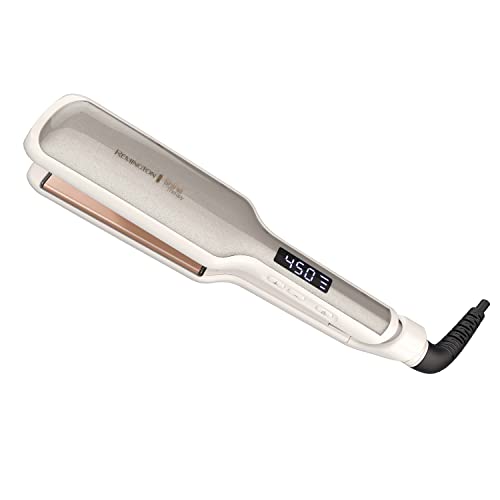
- 1. Remington Shine Therapy 2 Inch Hair Straightener — Best overall
- 2. Conair Double Ceramic 1" Straightener — Best budget pick
- 3. REVLON Ceramic Coated 2" Flat Iron — Best for pros
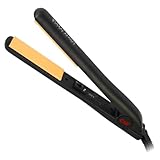
- 4. CHI Original 1" Ceramic Flat Iron — Best minimal setup
- 5. Hypoet Cordless Straightener Brush — Runner-up
- 6. DORISILK 2-in-1 Ceramic Flat Iron — Best for beginners
- 7. TYMO Hair Straightener Brush — Best premium
- Which plate size suits your hair?
- What separates flat irons from straightening brushes?
- When a different pick wins
- The verdict
- FAQ
The best ceramic hair straightener for split ends is the Remington Shine Therapy 2 Inch Hair Straightener, thanks to its wide 2-inch ceramic plates that cover more hair per pass and cut down repeat heating. If you want to spend the least, the Conair Double Ceramic with 1-inch plates and 5 heat settings up to 410°F is the smarter buy. No iron repairs a split end, so the real job is styling with less heat exposure.
Let me be straight about who this guide is not for. If you have already read that plate material fixes damage, you are half right and half sold a story. Ceramic plates spread heat more evenly than bare metal, which lowers the odds of a scorched hot spot. That is prevention, not repair. A split end is a cracked hair shaft, and no heated tool bonds it back together.
So this is for people who want smoother-looking ends and less new breakage. It is not for anyone hoping a flat iron will undo months of damage. If that is you, a trim and a break from heat will do more than any tool here.
Best ceramic hair straightener for split ends at a glance
| Pick | Plate size | Heat control | Price |
|---|---|---|---|
Best overall Remington Shine Therapy 2 Inch Hair Straightener |
2" | Not listed | Check Price |
Best budget pick Conair Double Ceramic 1" Straightener |
1" | 5 settings, to 410°F | Check Price |
Best for pros REVLON Ceramic Coated 2" Flat Iron |
2" | Multiple, to 400°F | Check Price |
Best minimal setup CHI Original 1" Ceramic Flat Iron |
1" | Fixed 392°F, on/off | Check Price |
Runner-up Hypoet Cordless Straightener Brush |
Brush | 3 levels (claim) | Check Price |
Best for beginners DORISILK 2-in-1 Ceramic Flat Iron |
1" | Adjustable, to 500°F | Check Price |
Best premium TYMO Hair Straightener Brush |
Brush | 5 settings (claim) | Check Price |



Can a straightener actually fix split ends?
Short answer: no straightener fixes split ends. A split end is a physical crack in the hair shaft, and heat does not glue it shut. Anything promising repair is describing how the result looks, not what happened to the fibre.
What a good ceramic tool does do is limit fresh damage. That matters, because most new split ends start with heat that was too high or applied too many times.
Here is where a straightener earns its place against splitting:
- Even heat. Ceramic plates spread warmth so no single spot gets scorched.
- Fewer passes. A plate that grips and slides straightens in one or two runs instead of five.
- A cooler option. Adjustable heat lets fine or fragile hair sit below the highest setting.
- A smoother finish. Sealing the cuticle flat makes existing ends look tidier, briefly.
The listings lean on this hopefully. Hypoet says its brush helps "eliminate dry frizzy hair and split ends," and DORISILK claims its plasma tech seals the cuticle. Treat both as the maker's words, not proof. Amazon's search returned these when asked about split ends, but no tool here is verified to mend one.
How I narrowed seven listings to these picks
I compared the published specifications across all seven listings side by side, then cut on three grounds before ranking anything.
First out: anything where the core numbers were missing. The Hypoet brush lists no plate width and no stated temperature, only "3 adjustable temperature levels" as a claim, so it could not compete on measured heat control. It survived as a runner-up on its cordless design alone.
Second cut: mismatched category. The TYMO sits under hot-air brushes rather than straighteners, so it is a hybrid, not a flat iron. It stays, clearly labelled, because some readers want that shape.
Third: I weighted three things in this order.
- Plate width, because coverage per pass drives how many times heat touches each strand.
- Heat control, because a cooler setting protects fragile ends better than a single fixed temperature.
- Weight and handling, from the listed figures, because a heavy iron makes slow, uneven passes more likely.
The Remington won on the first criterion with 2-inch plates and a credible finish story. The Conair took the value slot on adjustable heat at the lowest price position. Everything else sorted by how well its numbers matched a real buyer.
1. Remington Shine Therapy 2 Inch Hair Straightener — Best overall
The widest plates in the set make it the fastest way to straighten more hair with fewer heat passes.
Best for: medium to long hair that needs a wide, fast pass Skip it if: your hair is fine or you style tiny sections
The Remington leads because its 2-inch plates cover more hair in a single stroke than any 1-inch iron here. Fewer strokes means each section meets the heat fewer times, which is the whole point when you are trying to protect fragile ends. It measures 2.2 x 10.8 x 2.2 in and comes in champagne, model S9531.
Remington says the plates are infused with argan oil, keratin and a micro-conditioner for even heat and up to 50% shinier hair. That shine claim is the maker's, so read it as a promise about finish, not a lab result. The even-heat design is the part that genuinely helps against splitting.
It sits toward the top of this set on price, and it is the one buyers here reach for far more often than the rest. Two sellers list it. The catch: the listing gives no stated temperature range, so you cannot set a precise low heat for very fine hair. Its 2-inch width also makes precise work near the roots clumsier than the 1-inch irons.
Pros:
- Widest plates in the set at 2"
- Even-heat ceramic with conditioning claim
- Chosen far more often than the rest here
- Compact 2.2 x 10.8 x 2.2 in body
Cons:
- No published temperature range
- Wide plates awkward on short layers
- Sits near the top of this set on price
2. Conair Double Ceramic 1" Straightener — Best budget pick
The cheapest pick here still gives you five heat settings, which is exactly the control fragile ends need.
Best for: spending the least while getting adjustable heat Skip it if: you want a wider plate for thick hair
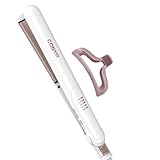
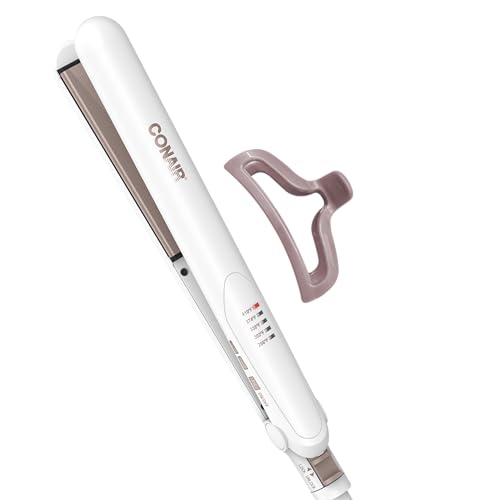
The Conair is the cheapest of the seven and still lands the feature that matters most for damaged hair: adjustable heat. Conair lists 5 heat settings up to 410°F, so you can keep fine or brittle sections well below the maximum. That single trait beats a fixed-temperature iron for anyone worried about breakage.
It uses double ceramic 1-inch plates and ships as a 2-count pack that includes a claw clip for sectioning, model CS221AMZ. The extra-long 14.4-inch body helps you work down a long section in one continuous glide. It comes in white and released in 2025.
The trade-off against the Remington is coverage. At 1 inch, you make more passes on thick or long hair, which adds heat exposure. And the maximum 410°F is high, so the burden is on you to dial it down. For the price position, though, getting genuine heat control at all is the win here.
Pros:
- Cheapest of the seven picks
- 5 heat settings up to 410°F
- Claw clip included for sectioning
- Extra-long 14.4 in plates
Cons:
- 1" plates mean more passes on thick hair
- Top setting of 410°F is high
- No stated warranty in the listing
3. REVLON Ceramic Coated 2" Flat Iron — Best for pros
Wide 2-inch plates plus multiple heat settings in the lightest iron here, at an entry price.

Best for: a light 2-inch iron with several heat levels Skip it if: you prefer a warranty-backed premium tool
The REVLON pairs 2-inch plates with the lowest weight in the whole set at 0.63 lb, which is why it earns the pro nod. Wide plates cover more hair, and a light body lets you move fast and steady, so each pass is quick and even. Fast, even passes are what keep heat off any one spot.
Revlon lists multiple heat settings and 400°F high heat, plus a tangle-free swivel cord, model RVST2182, released in 2018. It is the second-cheapest here, so you get the wide-plate advantage without the premium price the Remington carries. Ceramic coating, Revlon says, helps reduce damage from over-styling.
Note the wording: "ceramic coated," not solid ceramic plates. A coating can wear over years of use, so this is the one to watch on longevity. Two sellers list it. The listing also does not spell out the exact heat range beyond the 400°F peak, so you are trusting the settings to be usably spaced.
Pros:
- Lightest iron in the set at 0.63 lb
- Wide 2" plates for fast coverage
- Multiple heat settings, 400°F peak
- Second-cheapest pick here
Cons:
- Ceramic coating, not solid plates
- Exact heat steps not published
- No stated warranty
4. CHI Original 1" Ceramic Flat Iron — Best minimal setup
One temperature, one switch, nothing to think about, if 392°F suits your hair.
Best for: one fixed temperature and nothing to fiddle with Skip it if: your hair needs a cooler setting
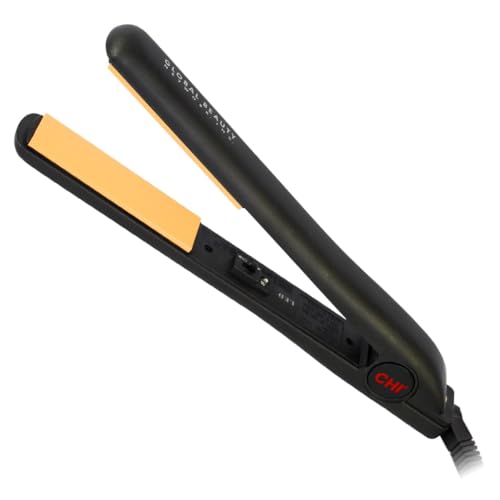
The CHI strips styling down to a single decision: on or off. CHI says the 1-inch floating ceramic plates heat to a fixed 392°F with no adjustable setting. For thick, healthy hair that always wants the same heat, that simplicity is a feature, not a limit. You never second-guess the dial because there is no dial.
It weighs 1.2 lb, the heaviest here, and carries an 11 ft swivel cord for easy reach, model GF1001AMZ, released in 2015. CHI lists dual voltage, so it travels across regions. The floating plates help it glide without snagging, which keeps passes smooth.
The fixed 392°F is the whole story, good and bad. Fine, colour-treated or already-fragile hair often wants to sit lower, and this iron will not let it. That makes it the wrong call for the exact split-end-prone hair this guide serves. It is also the most expensive pick and the slowest seller of the seven, so you pay premium for simplicity.
Pros:
- Dead-simple on/off operation
- Floating plates glide smoothly
- Long 11 ft swivel cord
- Dual voltage for travel
Cons:
- No way to lower the 392°F heat
- Heaviest iron here at 1.2 lb
- Most expensive pick in the set
5. Hypoet Cordless Straightener Brush — Runner-up
The only cordless pick here, built for touch-ups where no plug exists.

Best for: travel and touch-ups without a plug socket Skip it if: you want published plate and heat specs
The Hypoet is the one tool here that works untethered, running on a 4000mAh battery with Type-C fast charging. That is its whole reason to exist: smoothing frizz on a train, in a hotel, or anywhere an outlet is not handy. For a quick fix on the go, nothing else in this set competes.
Hypoet describes ceramic tourmaline MCH heating, ionic anti-frizz output, and heat-up in about 50 seconds, with three adjustable levels and anti-scald protection. It says the negative ions help tackle dry, frizzy hair and split ends. Every one of those is the maker's claim, and the brush shape means it smooths rather than pinches hair flat.
The honest problem: this listing publishes almost no hard numbers. No plate width, no stated temperature, and the dimensions read oddly. Only one seller lists it, and it sells the slowest of the group. As a primary daily straightener you are buying on trust, which is why it lands as runner-up rather than higher.
Pros:
- Only cordless pick in the set
- 4000mAh battery, Type-C charging
- Roughly 50-second heat-up claim
- Anti-scald and ionic claims
Cons:
- No published plate width or temperature
- Only one seller lists it
- Slowest seller of the seven
6. DORISILK 2-in-1 Ceramic Flat Iron — Best for beginners
A light 1-inch iron that straightens and curls, with adjustable heat you can keep low.

Best for: a light 1-inch iron that doubles as a curler Skip it if: you never want to go near very high heat
The DORISILK suits a first straightener because it is forgiving to handle and does two jobs. At 0.54 lb it is the second-lightest here, and its 1-inch floating plate rounds enough to curl as well as straighten. One tool, two looks, easy to control in a beginner's hand.
DORISILK lists a wide adjustable range reaching 500°F, 30-second heating, dual voltage, a 360° swivel cord, an anti-scald button and auto power-off when idle. It claims plasma tech seals the cuticle for a frizz-free result, model MD-V209. The adjustability is the useful part: you can set it low for fragile ends and only climb when you need to.
That 500°F ceiling is also the warning. High heat is where split ends are born, so treat the top of the range as off-limits for damaged hair. Only one seller lists it, and it is a mid-pack seller here. As entry-priced picks go, though, the low weight and heat control make it easy to learn on.
Pros:
- Second-lightest at 0.54 lb
- Straightens and curls in one tool
- Wide adjustable heat range
- Auto power-off and anti-scald button
Cons:
- 500°F ceiling is risky for damaged hair
- Only one seller lists it
- Curl-friendly plate less crisp for straightening
7. TYMO Hair Straightener Brush — Best premium
A brush-iron hybrid with five heat settings and the fullest accessory kit here.

Best for: a brush-and-iron hybrid with a full accessory kit Skip it if: you want traditional pinching plates
The TYMO is the most complete package in the set. It arrives with a detangling brush, two clips, a heatproof glove and a bag, so you are ready to style out of the box. For a gift or a first serious tool, that bundle is a real edge over the bare irons here.
TYMO calls it a hot comb and flat iron in one, with PTC heating, 3D brush teeth, five heat settings for different hair types and an anti-scald exterior. It weighs 0.86 lb, model HC100. TYMO says the design reduces heat damage by 50%, which is the maker's figure, not a measured one. The brush format glides over hair rather than clamping it.
It is the priciest pick here and, being a brush, will not deliver the crisp pin-straight edge a true flat iron gives. It also sits under hot-air brushes rather than straighteners, so buy it knowing it is a hybrid. Only one seller lists it. For gentler, blowout-style smoothing, that is fine.
Pros:
- Fullest accessory kit in the set
- Five heat settings for hair types
- Anti-scald exterior and auto-off
- Brush glide instead of clamping
Cons:
- Priciest pick in the set
- Brush won't give crisp pin-straight edges
- Only one seller lists it
Which plate size suits your hair?
Plate width is the quiet decider in this whole set, and it splits cleanly by hair type. The wider the plate, the more hair you cover per stroke, and the fewer times heat touches each section.
- Fine, short or layered hair: go 1-inch. The Conair, CHI and DORISILK give you the precision to work close to the root and around face-framing pieces.
- Medium to long, thick hair: go 2-inch. The Remington and REVLON clear a wide section in one pass, so your ends meet the heat once, not four times.
- Frizz smoothing over crisp straightening: go brush. The Hypoet and TYMO glide rather than clamp, better for a soft blowout look than a sharp finish.
The mistake buyers make is picking the widest plate for control, then finding it clumsy near the hairline. Match the plate to your hair, not to the biggest number. For split-end-prone hair, fewer passes usually beats a narrower, more precise plate.
What separates flat irons from straightening brushes?
Five of these are flat irons; two are straightening brushes. The difference changes how they treat fragile ends. A flat iron presses hair between two heated plates, so each strand gets direct, firm contact and a crisp result. A brush sits heated teeth against the hair as you comb, smoothing rather than pressing.
For split-end-prone hair, the brushes have one gentle advantage and one drawback:
- Gentler contact. Less clamping pressure on already-stressed ends.
- Softer result. A blowout look, not a pin-straight edge.
- Missing data. The Hypoet publishes no plate or temperature figures, and TYMO's damage-reduction number is a claim.
A flat iron like the Remington or Conair gives you the crisp finish and, in most cases here, clearer heat specs. If your priority is a sleek, straight edge, choose an iron. If it is frizz control with minimal pulling, a brush earns its keep. Neither shape repairs damage, so the deciding factor stays heat control.
When a different pick wins
The Remington leads for most people, but three clear conditions flip that.
- If you are on the tightest budget, the Conair wins. It is the cheapest of the seven and still gives you 5 heat settings, so you keep the heat control that protects fragile ends.
- If you want the lightest iron with wide plates, the REVLON wins at 0.63 lb. Fast, effortless passes suit anyone styling a lot of hair quickly.
- If you need to style away from a socket, the Hypoet wins by default, being the only cordless pick here.
Two more flips worth naming. If you want a two-in-one that also curls, the DORISILK earns it, though watch its 500°F ceiling. And if you want a full kit with a glove and clips as a gift, the TYMO's bundle is unmatched here. The threshold is simple: pick on plate width and heat control first, price and format second.
The verdict
Judge these by tier and the choice gets easy. In the entry tier, the Conair Double Ceramic is the pick, because it is the cheapest of the seven yet still offers 5 heat settings up to 410°F. That heat control is the single most useful trait for anyone trying to protect fragile, split-prone ends, and getting it at the lowest price is rare.
In the middle and premium tiers, the Remington Shine Therapy is the best ceramic hair straightener for split ends overall. Its 2-inch plates cover more hair per stroke than any 1-inch iron here, so each section meets the heat fewer times. Fewer passes means less cumulative damage, which is exactly the point when no tool can repair a split end.
The REVLON is the runner-up, and its edge is concrete: at 0.63 lb it is the lightest iron in the set, with the same 2-inch width as the Remington at a lower price. If you want wide plates and a feather-light body, take it. Just remember it is ceramic coated, not solid ceramic. Whatever you choose, keep the heat low and the passes few.
FAQ
Can a ceramic hair straightener for split ends repair the damage?
A ceramic hair straightener for split ends cannot repair the damage. A split end is a physical crack in the hair shaft, and no heated tool bonds it back together. What ceramic plates do is spread heat evenly and let you straighten in fewer passes, which prevents new splitting. The only real fix for existing split ends is a trim.
Is a wider 2-inch plate worth it over a 1-inch iron?
A wider 2-inch plate is worth it for medium to long, thick hair. The Remington and REVLON cover more hair per stroke, so each section meets the heat fewer times, which matters for fragile ends. For fine, short or layered hair, a 1-inch plate like the Conair or CHI gives better control near the roots and around the hairline.
How does the Remington compare to the Conair head-to-head?
The Remington compares to the Conair on two clear points. The Remington has wider 2-inch plates for faster coverage and fewer heat passes, but no published temperature range. The Conair is the cheapest here with 5 settings up to 410°F, giving you heat control the Remington's listing does not state. Choose Remington for coverage, Conair for adjustable heat on a budget.
What heat setting protects fragile, split-prone ends best?
The heat setting that protects fragile ends best is the lowest one that still straightens your hair. That is why adjustable models like the Conair, REVLON and DORISILK suit damaged hair better than the CHI's fixed 392°F. High peaks such as DORISILK's 500°F ceiling are where new splits start, so keep well below the maximum and add passes only if needed.
Is a straightening brush worth it compared to a flat iron?
A straightening brush is worth it if you want a soft blowout look with gentler contact. The Hypoet and TYMO glide heated teeth over hair instead of clamping it, which pulls less on stressed ends. The trade-off is a less crisp, pin-straight finish and thinner published specs. For a sharp straight edge with clearer heat data, a flat iron wins.
Your next move is to match your hair to a plate, not chase a repair claim no tool can keep. For most people with medium to long hair, the Remington Shine Therapy is the right default: its 2-inch plates straighten more hair in fewer strokes, and fewer strokes mean less heat on ends that are already fragile. Set whatever tool you buy to the lowest heat that works, book a trim for the ends you already have, and let the straightener do the one job it can, keeping new damage from starting.