Best Organic Hair Dye for Dry Hair, Gentle Picks

Six plant-forward and low-chemical hair colours compared on ingredients, format and coverage, with a clear winner for anyone whose hair already runs dry.

By Jody ParkerUpdated 16 min read
On this page
- Best organic hair dye for dry hair at a glance
- How I narrowed seven listings to a working shortlist
- 1. Herbatint 1N Black — Best overall
- 2. The Henna Guys 200 Grams — Runner-up
- 3. Indus Valley Natural Organic Damage Free Gel Hair Color — Best upgrade
- 4. Indus Valley Organic Henna Hair Colour Kit — Best for pros
- 5. H&C 100% Natural Indigo Powder — Best budget pick
- 6. POLAR HAIR CARE Polar Hair Dye Shampoo — Best premium
- 7. Garnier Nutrisse Ultra Crème — Best minimal setup
- Does organic hair dye actually help dry hair?
- Cream, powder or shampoo: which format suits you?
- What the listings do not tell you about dryness
- When a different pick wins
- The verdict
- FAQ
The best organic hair dye for dry hair is Herbatint 1N Black, a 5.75 fl oz ready-mixed cream the brand builds around 8 organic herbal extracts and pours as a low-lift natural shade. If you want a single plant ingredient and no cream base at all, The Henna Guys 200 Grams pure henna powder is the better buy for warm red tones. Here is the honest part first: the word "organic" is doing a lot of work across this set, and only some of these picks earn it. Below, I map what each format actually puts on already-parched hair.
Best organic hair dye for dry hair at a glance
| Pick | Format | Key ingredient claim | Price |
|---|---|---|---|
Best overall Herbatint 1N Black |
Cream, 5.75 fl oz | 8 organic herbal extracts (claim) | Check Price |
Runner-up The Henna Guys Pure Henna |
Powder, 7.05 oz | 100% pure henna (claim) | Check Price |
Best upgrade Indus Valley Gel Colour |
Gel, 20g+200ml | Ammonia and PPD free (claim) | Check Price |
Best for pros Indus Valley Henna Kit |
Powder, 3.53 oz | ECOCERT and USDA Organic (claim) | Check Price |
Best budget pick H&C Indigo Powder |
Powder, 8 oz | 100% chemical-free indigo (claim) | Check Price |
Best premium Polar Hair Dye Shampoo |
Shampoo, 6.76 fl oz | Vegan 3-in-1 (claim) | Check Price |
Best minimal setup Garnier Nutrisse Ultra Crème |
Cream, 2 count | Plant oils, gray coverage (claim) | Check Price |




How I narrowed seven listings to a working shortlist
I started with the buyer, not the box. Someone hunting for the best organic hair dye for dry hair usually already knows a bad pick can leave hair feeling like straw. So I read every listing for what it puts on the hair and what it leaves out.
Three profiles shaped the cut:
- The plant purist who wants a powder with a single named ingredient and no cream base.
- The convenience colourist who wants a ready-mixed formula and a short processing time.
- The grey-coverage shopper who cares less about label purity and more about even results.
Every one of the seven picks maps to at least one of those. The henna and indigo powders serve the purist. Herbatint and Garnier serve the convenience buyer. Indus Valley's gel and the Polar shampoo split the grey-coverage crowd by effort.
I also flagged where "organic" is loose. A cream dye with herbal extracts is not the same as a triple-sifted powder certified by ECOCERT. Both appear here because both suit different definitions of gentle, and I say clearly which is which in each section below.
1. Herbatint 1N Black — Best overall
Herbatint 1N Black wins because it pairs a ready-to-use cream format with a plant-forward formula, so you get low-fuss colour without mixing a powder paste.
Best for: someone who wants ready-mixed cream colour with a plant-forward formula Skip it if: you want a fully chemical-free powder
This is the only pick here that lands as a full cream kit at 5.75 fl oz while still leaning on botanical content. Herbatint says the formula carries 8 organic herbal extracts and describes the N series as a natural shade that lightens hair up to two shades at most. That low-lift approach matters for dry hair, since aggressive lightening is where a lot of damage starts.
The brand calls it clinically and dermatologically tested on sensitive skin, and flags gluten-free, non-GMO, vegan and cruelty-free credentials. Those are the manufacturer's claims, not lab results I can verify, so treat them as a starting point and patch-test anyway. The kit ships as a single unit weighing 4.64 oz across a 6.75 x 3.25 x 2 in box.
Its trade-off against the powders: it is a cream, not a pure single plant, so a strict purist will prefer henna. It also sits at the premium end of this set. That is the price of skipping the mess.
Pros:
- Ready-mixed cream, no paste to prepare
- 8 organic herbal extracts, per the brand
- Low-lift natural shade, gentler on fragile hair
- Vegan, gluten-free and non-GMO claims
- Generous 5.75 fl oz volume
Cons:
- Premium price position in this set
- Cream base, not a single plant ingredient
- Botanical claims are unverified marketing
- Lightens only up to two shades
2. The Henna Guys 200 Grams — Runner-up
The Henna Guys pure henna powder is the runner-up because it delivers single-ingredient plant colour with a warm red result and a conditioning side effect.
Best for: redheads who want a single-ingredient plant dye Skip it if: you need to lighten dark hair
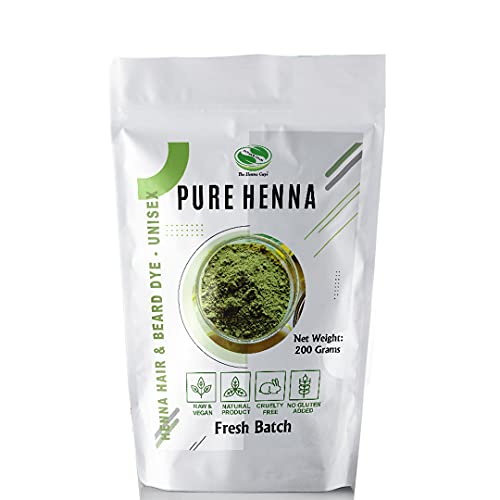
If Herbatint is the convenient choice, this is the purist's. The listing describes it as 100% pure henna, triple cloth sifted for a smooth, non-clumpy paste, with a high lawsone content the brand ties to reliable colour. Henna's appeal for dry hair is that it coats and can condition rather than strip, which is why it keeps a loyal following.
At 7.05 oz of powder, one pouch goes a long way, and it slots in as the third-cheapest pick here. The listing is blunt about limits: it cannot lighten dark hair. Henna deposits warm red tone only, so if you are starting dark, the result reads as a subtle shift, not a transformation.
Its trade-off is effort. You mix, you wait, you rinse, and the red is permanent in a way you cannot undo quickly. Against the ready creams, that is a real time cost. Against the indigo powders, it delivers red rather than brown or black.
Pros:
- 100% pure henna, single ingredient
- Triple cloth sifted for smoother paste
- Generous 7.05 oz pouch
- Conditions while it colours, per the brand
Cons:
- Cannot lighten dark hair
- Requires mixing and long processing
- Red tone only, no brown or black
- Permanent result you cannot quickly reverse
3. Indus Valley Natural Organic Damage Free Gel Hair Color — Best upgrade
The Indus Valley gel colour is the upgrade pick because it targets grey coverage without ammonia or peroxide, in a format that spreads more like a cream than a powder.

Best for: grey coverage without ammonia or peroxide Skip it if: you want black or red tones
This one splits the difference between the messy purity of henna and the convenience of cream. The brand describes a semi-permanent medium brown gel with no hydrogen peroxide, no ammonia, no PPD, no parabens and no resorcinol, which it says avoids the dryness and roughness harsher dyes cause. For someone already fighting parched hair, that ingredient list is the pitch.
Indus Valley claims complete grey coverage in 35 minutes with colour lasting up to 5 weeks, and says the formula carries 8 nourishing herbs. The listing also states dermatologist endorsement, which is a marketing claim rather than proof, so weigh it as such. The kit weighs 7.76 oz across a 20g plus 200ml format.
Its trade-off: it lands as a mid-priced pick and comes only in medium brown here, so it will not satisfy anyone chasing black or a warm red. The semi-permanent nature also means more frequent reapplication than a true permanent dye.
Pros:
- No ammonia, peroxide, PPD or resorcinol, per the brand
- Grey coverage claimed in 35 minutes
- Gel spreads more evenly than loose powder
- 8 nourishing herbs, per the listing
Cons:
- Only medium brown in this listing
- Semi-permanent, fades in about 5 weeks
- Mid-price for a single shade
- Dermatologist claim is unverified
4. Indus Valley Organic Henna Hair Colour Kit — Best for pros
The Indus Valley henna kit is the pick for pros because it stacks certifications and a soft-black powder blend that rewards someone comfortable mixing and timing a paste.

Best for: experienced henna users chasing a soft black Skip it if: you have never mixed a powder dye
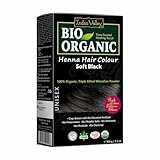
This is the most credential-heavy pick in the set. The listing states certification by ECOCERT, USDA Organic and India Organic, and describes a triple-sifted microfine powder made from handpicked, sun-dried herbs with no chemicals or synthetic fertilizers. It blends indigo leaves, cassia and lawsonia inermis to reach a soft black the brand ties to shine and lustre.
That blend is exactly why it suits experienced hands. Getting black from plant powders usually means a two-step or carefully timed process, and the result depends on your patience. The kit weighs 3.53 oz across a 5.91 x 3.35 x 1.97 in box, and it lands as the second-cheapest pick here.
Its trade-off is the learning curve. A first-timer can end up with muddy or uneven tone, and the listed size skews small for anyone with long hair who wants full coverage in one go. If you have never worked with henna, start with the pure red powder above and graduate to this.
Pros:
- ECOCERT, USDA Organic and India Organic claims
- Triple-sifted microfine powder
- Blends indigo, cassia and lawsonia for soft black
- Second-cheapest pick in this set
Cons:
- Steep learning curve for beginners
- Small 3.53 oz size for long hair
- Multi-step process to reach true black
- Certification claims are unverified here
5. H&C 100% Natural Indigo Powder — Best budget pick
The H&C indigo powder is the best budget pick because it is the cheapest way into plant colour, built to deepen henna toward brown or black rather than work alone.

Best for: people already using henna who want to deepen to black Skip it if: you expect indigo to work alone on grey
This is the cheapest of the seven and the most specialised. The listing describes it as 100% chemical-free indigo powder with no PPD, giving a natural indigo blue tone. The critical detail sits in its own bullet: mix it with, or apply it after, pure henna for best results. Indigo on its own does not reliably cover grey, and the brand says as much.
At 8 oz, the pouch matches the larger henna sizes here, so pairing the two is economical. For someone whose hair runs dry, the plant-only route avoids the peroxide that strips moisture, which is the whole reason people reach for this method.
Its trade-off is that it is a component, not a complete answer. On its own it can turn light hair a strange blue-green, and it demands the two-step routine the pros' kit hints at. Treat it as the second half of a henna-then-indigo plan, not a standalone dye.
Pros:
- Cheapest pick in the set
- 100% chemical-free indigo, per the brand
- Generous 8 oz pouch
- No PPD, per the listing
Cons:
- Does not work well alone
- Needs henna as a first step
- Can read blue-green on light hair
- Colour label of powder is green, not final result
6. POLAR HAIR CARE Polar Hair Dye Shampoo — Best premium
The Polar dye shampoo is the premium pick because it folds colour into a wash step, trading lasting results for the lowest effort in this whole set.

Best for: anyone who wants colour built into a wash-day routine Skip it if: you want lasting permanent colour
This is the odd one out, and that is its charm. The listing describes a semi-permanent medium brown shampoo that cleanses, colours and conditions in one 6.76 fl oz bottle, aimed at people who want to blend visible greys gradually rather than commit to a full dye day. Polar calls the formula vegan and positions it as a gentler alternative to traditional routines.
For dry hair, the appeal is that you skip a separate harsh colour session entirely. The trade-off is baked in: gradual shampoo colour builds and fades with washing, so it never matches the depth or permanence of a cream or henna paste. Polar also flags a safety note not to exceed the recommended duration, which tells you this is not a leave-it-on-forever product.
It sits at the top of the price range here despite covering only medium brown. You are paying for convenience, not coverage, and only you can decide if that swap is worth it.
Pros:
- Colour built into a single wash step
- 3-in-1 cleanse, colour, condition claim
- Vegan formula, per the brand
- Lowest effort of any pick here
Cons:
- Most expensive pick in the set
- Semi-permanent, fades with washing
- Medium brown only
- Usage-duration caution on the label
7. Garnier Nutrisse Ultra Crème — Best minimal setup
Garnier Nutrisse Ultra Crème earns the minimal-setup nod because it ships as a two-pack of ready cream colour with plant oils and full grey coverage, though its label is the least plant-pure here.

Best for: shoppers who want a two-pack of ready cream colour Skip it if: you want a fully plant-based label
Garnier is the mainstream choice in this group, and it is honest about being a conventional permanent dye dressed with plant oils. The listing describes 100% grey coverage lasting up to 8 weeks, a Color Boost technology for richer tone, and an application that mixes colorant, developer and an oil ampoule before a 30-minute process. It arrives as a 2 count pack weighing 0.96 lb.
For dry hair, the oil ampoule is the relevant hook, and the two-pack means enough product for long hair or two applications. Garnier calls the range vegan and cruelty-free across 60-plus shades.
Here is where I stay honest: this is the pick that stretches the "organic" label furthest. It is a permanent developer-based dye with plant oils added, not a plant powder or a peroxide-free gel. If your priority is a clean ingredient list, the henna and Indus Valley picks beat it. If your priority is reliable grey coverage from a ready kit, this is the easiest path, and it sits at the premium end for that convenience.
Pros:
- Ready two-pack cream kit
- 100% grey coverage claim, up to 8 weeks
- Oil ampoule step for dry hair
- Vegan and cruelty-free, per the brand
Cons:
- Least plant-pure formula in the set
- Uses a developer, not peroxide-free
- Premium price position
- Requires mixing three components
Does organic hair dye actually help dry hair?
Here is the shopping consideration Amazon's search does not settle for you: "organic" is not a regulated promise on a hair dye box, and none of these listings prove a moisture benefit. So judge the label yourself.
What actually tends to matter for dry hair:
- No peroxide or developer. Lightening chemistry is where moisture loss usually starts. The henna and indigo powders and the Indus Valley gel skip it. Garnier does not.
- Plant coating over stripping. Henna deposits tone and can coat the strand, which is why it reads as conditioning to many users.
- Low lift. Herbatint states a maximum of two shades of lightening, gentler than a full bleach step.
The honest verdict on the qualifier: this set was gathered under a loose reading of both "organic" and "dry hair," and no product here carries a verified moisture claim. Patch-test, read the ingredient list, and treat every botanical bullet as the maker's pitch until your own hair tells you otherwise.
Cream, powder or shampoo: which format suits you?
The format decides your day more than the shade does. Match the effort to your patience.
- Cream kits (Herbatint, Garnier): mix and apply, roughly 30 minutes, then rinse. Least mess, most convenient. Herbatint leans plant-forward; Garnier leans conventional.
- Powders (The Henna Guys, both Indus Valley powders, H&C indigo): mix into a paste, wait longer, rinse thoroughly. Most plant-pure, most labour, and often the most conditioning feel.
- Gel (Indus Valley): spreads like a cream but skips peroxide, a middle path between the two.
- Shampoo (Polar): colour during a wash, no separate session, but gradual and semi-permanent.
A quick way to choose: if you have never coloured at home, start with a cream or the gel. If you want the cleanest ingredient list and do not mind the wait, go powder. If you want zero extra steps, the shampoo trades depth for ease. There is no single right format here, only the one that fits your bathroom and your calendar.
What the listings do not tell you about dryness
The boxes are quiet on a few things that decide how your hair feels afterward.
First, none of these listings state a full ingredient panel in the data I have, so a "chemical-free" or "8 herbal extracts" bullet is a headline, not a formula. Read the actual carton.
Second, size versus hair length is a hidden trap. The Indus Valley pro kit lists at 3.53 oz, which is fine for short or medium hair but thin for long hair wanting one-pass coverage. The 8 oz powders and the 5.75 fl oz Herbatint cream give you more room.
Third, permanence is a moisture decision too. A semi-permanent gel or shampoo fades and needs reapplying more often, which means more frequent handling of already-dry strands. A henna result is near-permanent, so you commit once. Neither is automatically gentler; it depends on how often you would otherwise recolour.
When a different pick wins
The winner is not the winner for everyone. Here is when to switch.
- If you want a single plant ingredient, choose The Henna Guys powder over Herbatint. It is one thing: 100% henna, warm red.
- If you need brown grey coverage without peroxide, the Indus Valley gel beats the cream. No ammonia, no PPD, claimed coverage in 35 minutes.
- If you want the least effort possible, the Polar shampoo wins, as long as you accept semi-permanent, medium-brown-only results.
- If black is the goal, the Indus Valley henna kit is built for it, but only if you are comfortable with a multi-step powder process.
- If budget rules, the H&C indigo is the cheapest entry, though it needs henna alongside it.
The cutoff is effort tolerance. Below it, creams and shampoo. Above it, powders that reward patience with the cleanest labels.
The verdict
If you want the easiest gentle route, Herbatint 1N Black is the pick. It is a ready 5.75 fl oz cream, it leans on 8 organic herbal extracts per the brand, and its low-lift natural shade avoids the aggressive lightening that dries hair out. You mix nothing complicated, you rinse in about half an hour, and you get even colour. That balance of plant-forward formula and low fuss is why it leads the best organic hair dye for dry hair field.
If you are a plant purist, the calculus flips. The Henna Guys 200 Grams pure henna is a single-ingredient 7.05 oz powder that coats and conditions while it colours, and it is the cleaner label of the two by a wide margin. Its exact advantage over Herbatint is purity: one plant, no cream base, no unverifiable extract list. The cutoff between them is effort. Herbatint saves you the paste, the wait and the mess. Henna asks for all three and repays you with a warm red no cream here can match. Pick by patience, not by price.
FAQ
Is organic hair dye worth it for dry hair?
Organic hair dye is worth it if your main goal is avoiding the peroxide and ammonia that strip moisture, which several picks here skip. But "organic" is unregulated on these labels, so the benefit depends on the specific formula. The henna powders and the peroxide-free Indus Valley gel make the strongest case; a developer-based cream like Garnier makes the weakest.
How does Herbatint compare to The Henna Guys henna?
Herbatint compares to The Henna Guys on one clear axis: convenience versus purity. Herbatint is a ready 5.75 fl oz cream with 8 herbal extracts, no mixing beyond the kit. The Henna Guys is a 7.05 oz single-ingredient powder you turn into a paste. Herbatint covers more shades gently; henna gives warm red only and cannot lighten dark hair.
Does the best organic hair dye for dry hair cover grey?
The best organic hair dye for dry hair options here vary on grey. Herbatint claims fade-defying grey coverage across 28 shades. Indus Valley's gel claims full coverage in 35 minutes without peroxide. Garnier claims 100% coverage up to 8 weeks. Indigo alone does not reliably cover grey and needs henna first, so read each pick's method before you buy.
What size do I need for long hair?
For long hair, size decides whether one pass covers everything. The Indus Valley pro kit lists at just 3.53 oz, which suits short to medium hair. The 8 oz powders from H&C and the 7.05 oz Henna Guys pouch give more room, and Herbatint's 5.75 fl oz cream covers a full head. Buy two of a smaller kit if in doubt.
Can I use indigo powder on its own?
Using indigo powder on its own rarely gives good results, and the H&C listing says so directly. Indigo produces a blue tone and is designed to be mixed with, or applied after, pure henna to reach brown or black. On light hair alone it can read blue-green. Treat it as the second step of a two-part plant routine, not a standalone dye.
Start by deciding how much effort you will actually spend on colour day, because that single answer sorts this whole list faster than any shade chart. If the answer is "as little as possible," Herbatint 1N Black is the sensible default: a ready cream, a plant-forward formula, and a low-lift shade that treats fragile hair kindly. If the answer is "whatever it takes for the cleanest label," reach for pure henna instead and accept the paste and the wait. Either way, patch-test first, read the carton, and let your own hair confirm the promise before you commit to a full head.